Virtual Reality: the next step in storytelling
VR is not a new way of watching a story, but of experiencing it. And there is still no manual.

These days the term Virtual Reality has gained a certain popularity. Over the course of the year we have read or heard about this technology moving into different fields that already go beyond video games.
Far from being completely new, VR has been around for some decades. In fact, it was in the 50s and 60s that people started experimenting with it, giving rise to the first prototypes and instruments. However, in recent years the technology has been perfected and has reached such a point that we can experience that reality in another way.
But beyond the technical question, which is essential for the experience, the challenge several industries face is how to adapt content and look for new ways of telling stories through this medium. Perhaps you are wondering why it is so important? And the answer is simply that technological progress is inevitable.
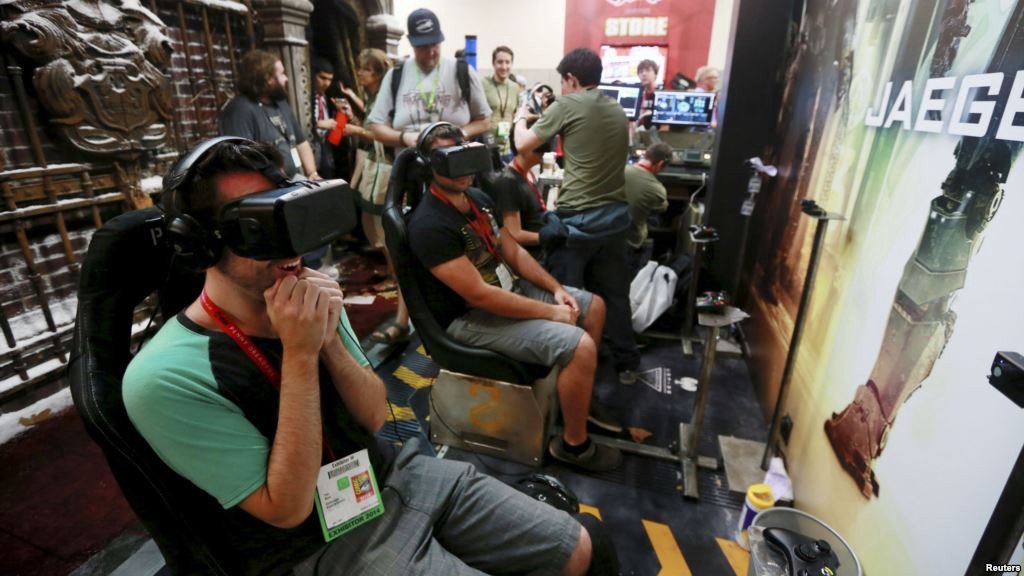
The world of video games was one of the first to make use of virtual reality, which added a plus to the gamers’ experience. But now this development is covering new ground, trying to get closer to the user and captivate them in a way they never imagined.
Advertising also took its first steps in the virtual environment. Several brands have moved into VR through experiential marketing activations that bring the potential consumer closer to the product or service, making them live a unique experience. But just as in every other field, it is still trying to find its way onto the path of success. Many will try to adapt old and familiar advertising formats to the medium, but since this is virgin territory, marketers will have the possibility of generating new models and approaches that create genuine interest on the part of consumers.
Cinema and television do not want to be left out either. Hollywood loves experimenting with new technology to enrich audiences’ experience, and VR opens up a whole set of opportunities for it. In fact, this very year the first VR film festival was held in the United States, where guests had a Samsung headset, and were able to enjoy the 20 shorts presented. A few months ago, CNN broadcast the first Democratic presidential debate live, also with VR.
Weeks ago, the newspaper New York Times and Google joined forces to launch a new app that works with Google Cardboard (the cardboard device that lets you mount the Smartphone). A new way of seeing journalistic stories, getting to the scene of events in a 360 environment, and with the intention of achieving a certain connection and empathy with the protagonists of the news.
Despite everything mentioned, this technology will have to overcome some challenges to establish itself like every other technical advent created by humankind. In the first place, it will have to make its way into the markets to become a mass technology. Something it still does not manage because of its high costs and because, even though several companies already have their VR device, several are in the testing phase.
In the second place there is the matter of how to go about adapting different types of content to this medium. We have already seen that this is possible and that it is being done, but there are still things to improve.
When we go to the cinema or watch television, we are used to seeing a film or program with a plot, based on a script, with a particular framing, and everything strung together through an editing process. That is, we do not have the possibility of controlling what we look at. We see what the director wants us to see.
However, VR poses something totally different. Both for the audience and for the audiovisual creator. In this new environment, the “fourth wall” is completely annulled. And the truth is that there is still no manual telling you how to tell a story through a VR device.
Without going any further, the current creative director of Oculus, the VR company acquired by Facebook, Saschka Unseld, says he feels as if he were back in film school. Unseld, who worked several years at Pixar, knows a thing or two about storytelling, and explains that far from being a new way of watching a story, it is a new way of experiencing it.
VR immerses us in the narrative, offering new potential for interaction with the characters and with the elements that are part of the environment. It is the user who has control over the scene, who can focus on whatever draws their attention most. This means a totally individual experience for the audience, each with their own interests and needs. As well as greater skill on the creator’s part to be able to anticipate the viewer’s moves.
We are without a doubt facing a medium that poses more questions than answers. What remains to be seen is how far VR’s interactive possibilities will go. The total integration of all the senses has not been possible so far. And although it has the ability to transport our consciousness to an alternate reality, which is no small thing, we are still mere receivers of the narrative. But without a doubt, it is its potential for telling stories that captivates our volatile attention today.