Production vs. spontaneity in marketing and communication
The phone aesthetic became a synonym for authenticity. Now everything is starting to look the same.

What works for brands, fitting in or standing out?
Brands feel more and more comfortable producing content shot on phones, reflecting the aesthetic of social media back to its users. But is shooting on a phone still authentic for audiences? What role do production values play when everything starts to look the same?
Not long ago, during the reign of television, brands produced professional 30-second spots explaining why they should be chosen. These commercials differed in style, function and effectiveness, but they more or less shared the feeling of being a corporation talking to its customers. Everyone knew their place.
With the advance of each new social media platform, this dynamic began to blur. Brands now present themselves as people; they use friendly language, they send you memes, and so on. The increasingly fragmented content landscape gives them a direct connection with culture and with consumers who, in turn, present themselves as brands.
Authenticity: a commodity in the battle for relevance.
And almost always, it works. It is the reason why influencers, creators and user-generated content are particularly popular: they let brands get their message across authentically, with the safety that comes from the distance created by a third party’s involvement. A few seconds browsing social media is enough to run into an ad filtered through the lens of influence. The content itself can also reflect users’ visual language.
The Apple example:
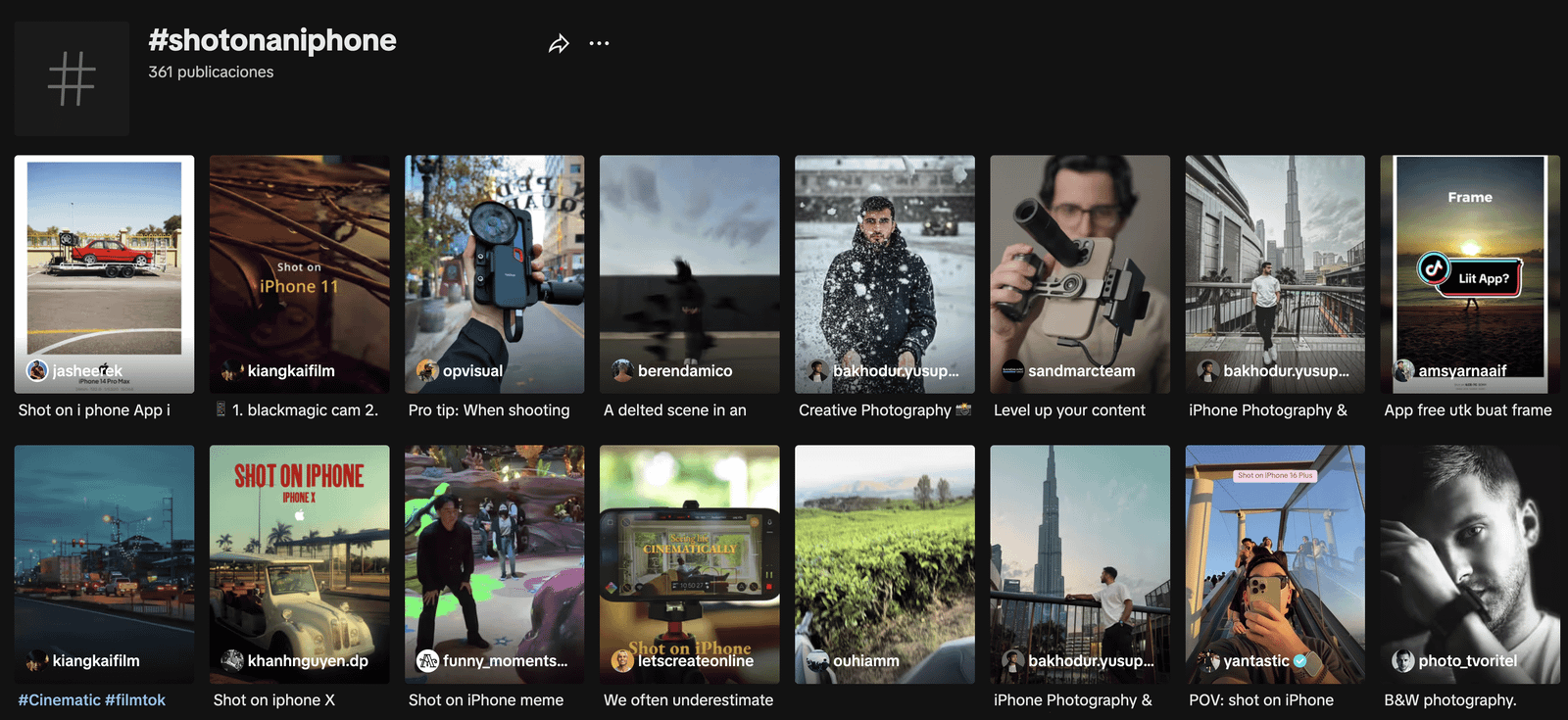
At a certain point, Apple knew audiences would engage more with images that were #ShotOnAniPhone (shot on an iPhone) than with content they produced themselves.
As a result, brand content shot on smartphones became normalized across every channel, quickly and cheaply reflecting the aesthetic of social media back to its users. That aesthetic became a synonym for authenticity and, therefore, for engagement, for agencies and marketing departments.
But sometimes, something more is needed
Does shooting on a phone still mean authenticity to audiences? What are the side effects of homogenizing the medium content is shot with? How do we avoid blending into the background by trying to fit in?
This is where production values still matter. Not talking about “low-fi” or “premium”, but going finer: lens choice, script, camera movement, lighting, performance, sound, editing, and so on. Without taking the time to work on this, we lose the ability to adjust the elements that influence how audiences react. Creativity is limited and feeds are flooded with content that looks and feels the same.
A phone camera has its own visual language. They are no longer low-fi: their quality is comparable to some “prosumer” level cameras. The big difference is that it suggests a sense of authorship and the presence of a person behind the camera, something that does not happen with dedicated camera crews. If it adds to the creative approach, it is the right choice. If not, there are probably better options, even considering limited budgets.
Benefits of planning content production
On projects where these considerations are not addressed from the director’s treatment or a production plan, agencies have to make sure they are integrated into the process, guided by creative departments with experience in this area.
You might think this approach seems less native to social media, causing rejection among audiences. For a while, that has been partly true from a simplistic standpoint, though we are now moving toward an aesthetic and budgetary race to the bottom. An inevitable backlash against this kind of content is coming, along with a rejection of brands personifying themselves among audiences.
If brands want to engage with the public on social media, they do not need to be our friends. They just need to be more entertaining than the next option in the feed.
The Burberry example
In a simple narrative, a series of content for social media is proposed under the concept “It’s always Burberry season”. Figures from the entertainment world wear a piece from the brand in everyday, almost spontaneous situations, backed by top-level audiovisual production.
The idea of branded content has had some false starts over the years, but we are entering a moment in which social media habits make it possible for brands to take part in more varied ways, with lower risk and greater rewards. It is not easy to pull off, and low-quality content will keep disappearing without a trace, but it is the agencies’ job to help brands with this.
In the battle for attention, those who base their creative and marketing decisions on the desired impact on the audience, resisting the temptation to prioritize the lowest possible production cost, will be the winners.
Combining both trends: the Adidas example
An example that combined both languages was the FOOH (faux out of home) trend. It worked because it was content that was both simple and entertaining: it combines the phone-shooting aesthetic with carefully produced CGI. This then evolved into ideas like the floating shoe teasers and adidas Running’s “Adizero Pro Evo 1“. But once it has been done a few times, the novelty factor fades and it is time to think about what is next.
Another FOOH example: The North Face in London
The North Face Campaign (Big Ben, London) pic.twitter.com/ZnYRn0I282
— Shtreetwear (@Shtreetwear) November 9, 2023
Things move fast today and appetites change quickly. In the post-authenticity era, brands will need to refocus on the old values of standing out rather than fitting in, to shine above the background noise.
Cover photo by cottonbro studio