". El CSS va aparte, * en la hoja b3- (hero-video.css). * * QUE HACE. El hero del caso muestra el video del caso en loop y mudo. * La interfaz de YouTube NO SE PUEDE ELIMINAR, solo tapar: cada vez que * el player arranca pinta ~4s de titulo, canal y transporte. Por eso la * foto del caso funciona de TELON — cubre el video en cada momento en * que YouTube muestra marca y se levanta cuando quedo limpio. Mas tres * botones propios (pausa, volumen, expandir) contra la IFrame API. * * DE DONDE SACA EL VIDEO: del widget `video` de Elementor que esta * dentro de .b3-hero__media. Se le lee el `data-settings`, se le saca * la URL de YouTube y despues se lo quita del DOM. El contenido sigue * viviendo en Elementor —el dueño cambia el video desde el editor y * esto lo sigue— pero el player lo construimos nosotros, con nuestros * playerVars, en vez de pelearnos con el de Elementor por el mismo div. * * DE DONDE SACA LA FOTO DEL TELON: ver fabricarTelon(). En orden: * atributo propio, la imagen que ya esta en el hero, la del bloque * b3-mod-boxed, y por ultimo og:image. Sin foto no hay telon, y sin * telon NO se construye el player: seria mostrar marca de YouTube. * * SI EL BLOQUE NO ESTA no pasa nada: las otras 135 paginas de caso * cargan la misma hoja y el mismo snippet, y salen por el primer `if`. * * ⚠️ POR QUE LA API SE PIDE ASI Y NO CON UN
Sin categorizar

Look how it moves! The trend in mobile consumption in Argentina.

More than a question of class, having a smartphone is a code of belonging.

To have or not to have a smartphone, that is the question. Technological dependence, global connection, the new online routines and virtual relationships are the foundation of a society that, more and more, feeds on digital exchange.

Argentina stands on the podium of Latin American countries with the greatest proliferation of smart devices, alongside Brazil and Mexico.  “The Argentine consumer stands out for embracing technology quickly, because it lets them do more and more things. We believe the mobile device is becoming the first screen”, said Carolina Bertoni, mobile and social media advertising specialist at Google for Spanish-speaking America.

“While in the first half of 2011 smartphones accounted for 21% of the total, they grew to 40% in 2012 and are expected to reach 50% of the domestic market by the end of 2013”, reported the Asociación de Fábricas Argentinas Terminales de Electrónica (AFARTE).

Another way to visualize this growth is through the number of mobile lines that exist in Argentina: 58 and a half million, according to INDEC (Instituto Nacional de Estadísticas y Censos), of which 37 million are active.  The explanation: for 5 pesos we can buy a prepaid phone line at a kiosk and use it in any handset.

We associate the level of “consumption” with a person’s income level and their class standing, but there are indicators that jump over these patterns and become codes of “belonging”. And just as “brand-name” sneakers once were, today smartphones are. No matter how, owning one is part of being part and that is what counts.

Students, parking attendants, taxi drivers, doctors, bricklayers, accountants, journalists, designers, politicians, teachers: smartphones have become an indispensable accessory in society’s everyday life, with no distinction of class or profession.


 

DEBUNKING MYTHS

Did you know…? 

 
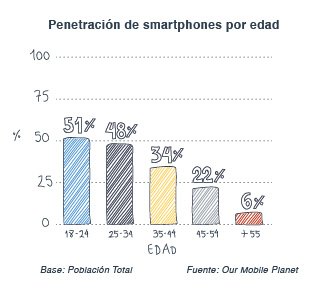
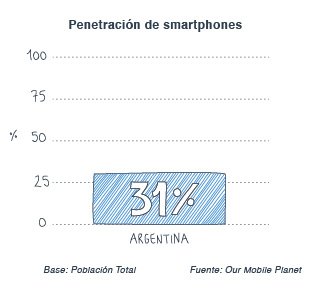
  • 31% of the Argentine population has a smartphone, according to the Our Mobile Planet Argentina study by Google.  And by the end of 2013, this percentage is expected to rise to 50% of the population. 
 
 
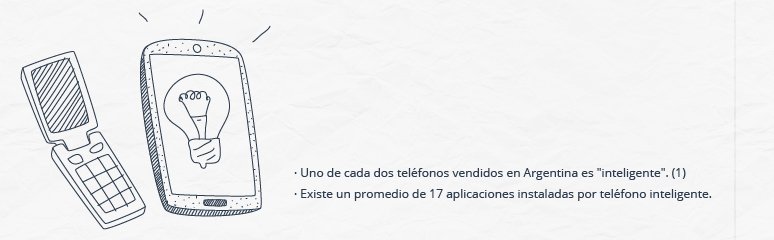
  • For every smartphone owner, an estimated 3 other people can get access to it. Acquiring a smartphone is not a question of “class”, but of preferences. One in every two phones sold in Argentina is “smart”.


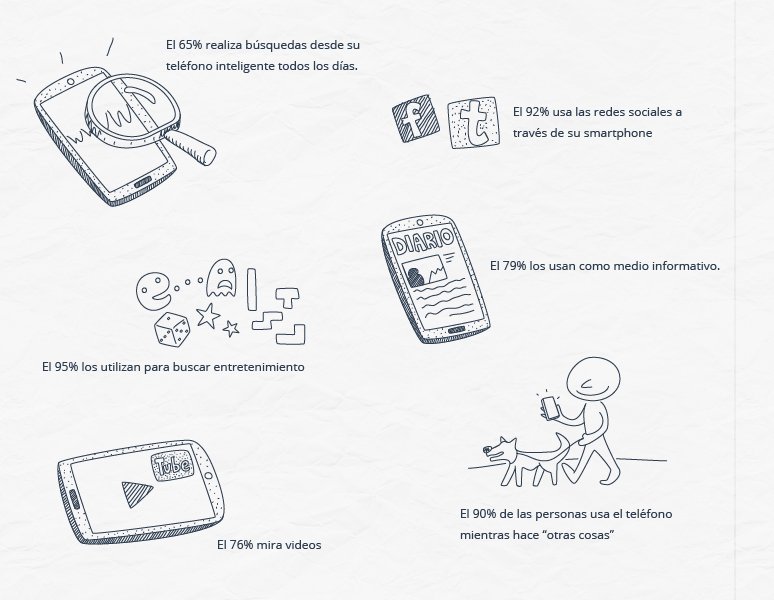
Trends in smartphone use:


Did you like the piece? Share it! |  Anything to add? Comment on it 😀

Alejandra Muscolini
Socia y Directora de Estrategia · Argency.
Seguir leyendo
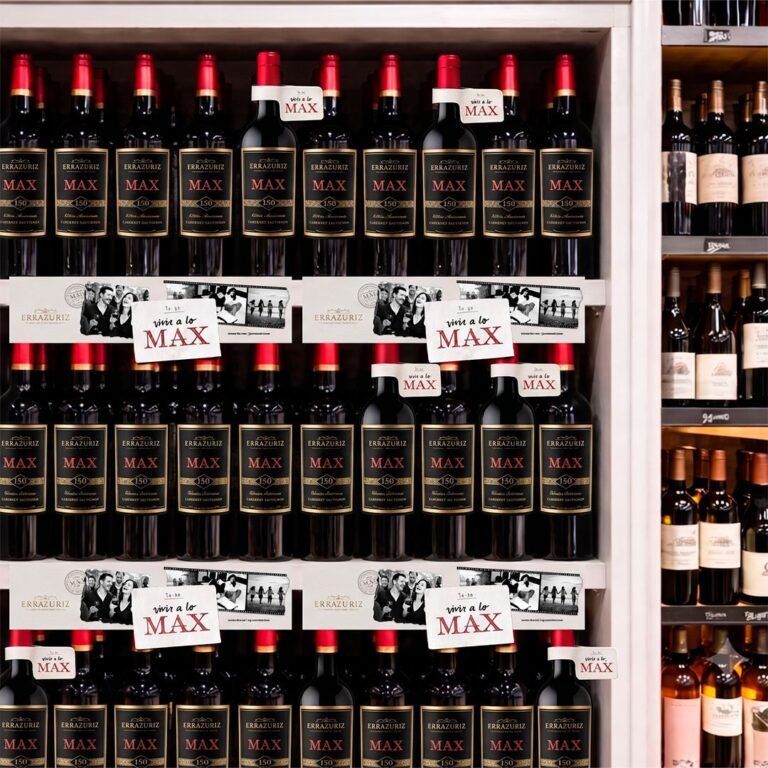
Góndola con botellas Errazuriz MAX 150 años, collarines y cenefas “vivir a lo MAX”_Argency agencia de diseño y publicidad. Mendoza. Argentina
Wine
14 August, 2026

The last meter: why the shelf decides what branding promises

The point of sale is not the end of the campaign: it is where it is decided whether it worked.

“Instagram Study 2026” cover over an orange, pink and purple gradient with wavy shapes_Argency design and advertising agency. Mendoza. Argentina
SOCIAL
19 June, 2026

Instagram 2026: fewer likes, more strategy

Metricool's study of 24 million posts: the way to earn visibility has changed.

Black and white card with a particle burst and the title Naming: the word before the brand_Argency design and advertising agency. Mendoza. Argentina
Argency
20 May, 2026

Naming: The word before the brand

Naming is not choosing a name: it is imagining what a brand can become.