“The future of television is apps”. That is what Apple’s CEO, Tim Cook, said a couple of weeks ago, when among several things the brand unveiled the fourth generation of its Apple TV. The truth is that Cook did not make any divine revelation; in fact for some years now we have been witnessing this “on-demand” revolution. But lately the supply and availability of devices and platforms for accessing audiovisual content has given static television a strong shake, casting doubt on its undisputed reign.
You no longer have to be in front of the tv at a certain time to watch our favorite program, and on top of that put up with the tedious ad breaks. Now with just a few clicks we can have what we want to watch, at the moment we want to do it.
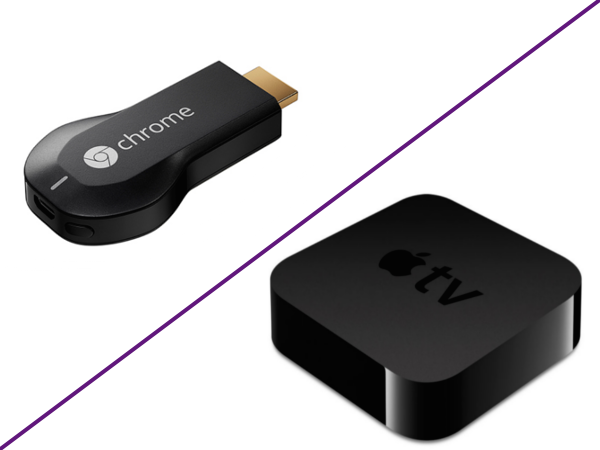
The most recent version of Apple TV has at the center of its new features the new App Store, where highly personalized content will be available, and which will let third-party developers expand the content and function ecosystem of this digital receiver.
Also, the new way of interacting with this technology has been widened thanks to the integration with Siri, Apple’s assistant par excellence. The new touch remote will let users search for programs, listen to music and even buy through a simple voice command. But the strongest bet of this remote is its functionality as a video game controller, where the brand will open up a whole new spectrum in the gaming experience.
Another device already generating a lot of expectation is the arrival of the new version of Chromecast that will be launched by Google next week. This is also a multimedia streaming device that came out in 2013. Thanks to the internet connection, this small unit gives access to a lot of content through the Google Chrome setup or from a smartphone.
According to speculation, the new Chromecast will not only have a different design from its predecessor but will have improved Wi-Fi connectivity and much more content available in the Chromecast Android app. It will even have new features including Fast Play, which would make a quick connection with the TV possible when the ‘Cast’ button is pressed in an app. And for the eternally unsatisfied who always ask for more, this new version would have the long-awaited support for Spotify.
But it does not end here, since reports indicate that Google would announce the arrival of Chromecast Audio, a small companion for its powerful device. This accessory would connect to the music system through the headphone input and would send the audio directly to Chromecast.
Another company betting heavily on streaming and content creation is Amazon. Like the already mentioned Apple TV and Chromecast, the Amazon Fire TV is a digital device that lets you play audiovisual content on our televisions. The company is planning to launch a new Fire TV with renewed hardware that will have the ability to stream video in 4K, along with an improved version of the Fire TV Stick, which comes with a remote with voice commands.
 Along with its electronic gadgets, Amazon has its streaming service called Amazon Instant Video, where hundreds of films and series can be accessed. It has likewise upped the game against its competitors by creating original programming with which it is having a lot of success.
Needless to mention Netflix, which in this same field is the leader of the on demand service and even became one of the first platforms to produce original series and film content.
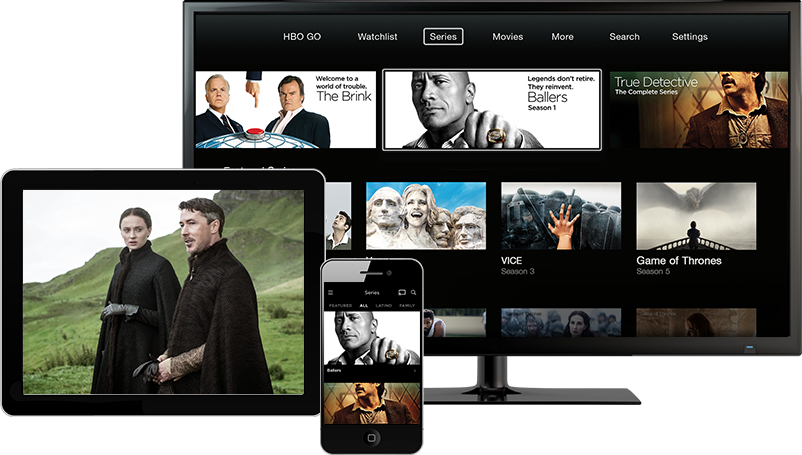
There is no denying that the arrival of television and cinema to streaming represents an unprecedented event for the entertainment industry. Like these services, several television networks such as HBO and FOX have extended their services to on-demand territory, with HBO GO and FOX Play.
Faced with all these innovations you can see that cable television is losing ground by leaps and bounds. The trend of “cord cutting” (cutting the cable) is more and more common among users. Added to this are the high costs of cable services, which make it more convenient to invest in a good Internet connection and sign up to one of the many on-demand services at an affordable monthly price.
A few days ago Netflix’s CEO, Reed Hastings talked to the American network CNBC where he predicted the definitive death of traditional television. He assured that within 10 or 20 years all networks will become on-demand and that for that television will have to evolve or die.
That is how the audiovisual landscape stands today. On demand and streaming consumption trends are the order of the day. It is almost certain that these services will keep evolving, but when it comes to sizing up the change it really means for the medium and for users, it becomes hard to know where this unstoppable revolution ends.
“The future of television is apps”. That is what Apple’s CEO, Tim Cook, said a couple of weeks ago, when among several things the brand unveiled the fourth generation of its Apple TV. The truth is that Cook did not make any divine revelation; in fact for some years now we have been witnessing this “on-demand” revolution. But lately the supply and availability of devices and platforms for accessing audiovisual content has given static television a strong shake, casting doubt on its undisputed reign.
You no longer have to be in front of the tv at a certain time to watch our favorite program, and on top of that put up with the tedious ad breaks. Now with just a few clicks we can have what we want to watch, at the moment we want to do it.
The most recent version of Apple TV has at the center of its new features the new App Store, where highly personalized content will be available, and which will let third-party developers expand the content and function ecosystem of this digital receiver.
Also, the new way of interacting with this technology has been widened thanks to the integration with Siri, Apple’s assistant par excellence. The new touch remote will let users search for programs, listen to music and even buy through a simple voice command. But the strongest bet of this remote is its functionality as a video game controller, where the brand will open up a whole new spectrum in the gaming experience.
Another device already generating a lot of expectation is the arrival of the new version of Chromecast that will be launched by Google next week. This is also a multimedia streaming device that came out in 2013. Thanks to the internet connection, this small unit gives access to a lot of content through the Google Chrome setup or from a smartphone.
According to speculation, the new Chromecast will not only have a different design from its predecessor but will have improved Wi-Fi connectivity and much more content available in the Chromecast Android app. It will even have new features including Fast Play, which would make a quick connection with the TV possible when the ‘Cast’ button is pressed in an app. And for the eternally unsatisfied who always ask for more, this new version would have the long-awaited support for Spotify.
But it does not end here, since reports indicate that Google would announce the arrival of Chromecast Audio, a small companion for its powerful device. This accessory would connect to the music system through the headphone input and would send the audio directly to Chromecast.
Another company betting heavily on streaming and content creation is Amazon. Like the already mentioned Apple TV and Chromecast, the Amazon Fire TV is a digital device that lets you play audiovisual content on our televisions. The company is planning to launch a new Fire TV with renewed hardware that will have the ability to stream video in 4K, along with an improved version of the Fire TV Stick, which comes with a remote with voice commands.
Along with its electronic gadgets, Amazon has its streaming service called Amazon Instant Video, where hundreds of films and series can be accessed. It has likewise upped the game against its competitors by creating original programming with which it is having a lot of success.
Needless to mention Netflix, which in this same field is the leader of the on demand service and even became one of the first platforms to produce original series and film content.
There is no denying that the arrival of television and cinema to streaming represents an unprecedented event for the entertainment industry. Like these services, several television networks such as HBO and FOX have extended their services to on-demand territory, with HBO GO and FOX Play.
Faced with all these innovations you can see that cable television is losing ground by leaps and bounds. The trend of “cord cutting” (cutting the cable) is more and more common among users. Added to this are the high costs of cable services, which make it more convenient to invest in a good Internet connection and sign up to one of the many on-demand services at an affordable monthly price.
A few days ago Netflix’s CEO, Reed Hastings talked to the American network CNBC where he predicted the definitive death of traditional television. He assured that within 10 or 20 years all networks will become on-demand and that for that television will have to evolve or die.
That is how the audiovisual landscape stands today. On demand and streaming consumption trends are the order of the day. It is almost certain that these services will keep evolving, but when it comes to sizing up the change it really means for the medium and for users, it becomes hard to know where this unstoppable revolution ends.