Five wine ads awarded at Cannes Lions
Behind the awards three things repeat: good storytelling, technology and thinking outside the box.

In this post we analyze why they won and which are some of the sector’s trends in the advertising field.
The award-winning work
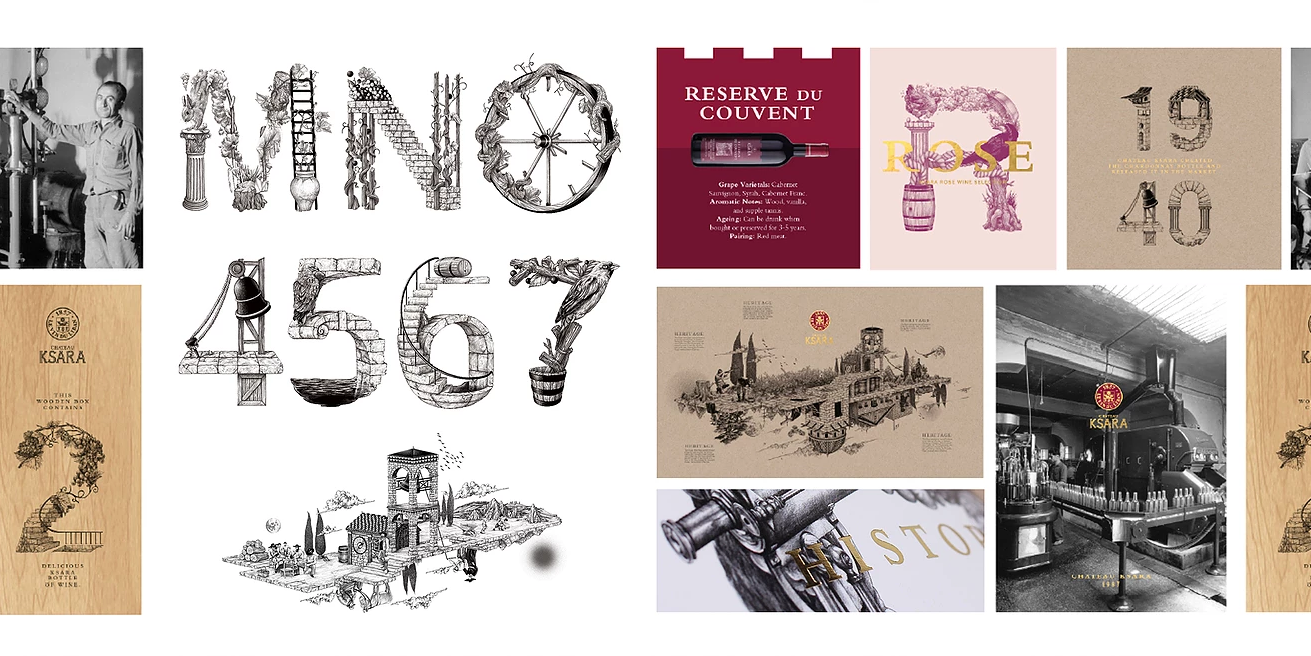
This work for the brand Chateau Ksara was created with the Leo Burnett Beirut team and won a Cannes Lions Silver for Design (Brand identity) in 2016.
As the winery described it, its 159-year history of winemaking has been told in many languages all over the world. However they preferred to create their “Wine Language”, to tell the incredible stories that gave rise to Chateau Ksara.
It is a brand identity inspired by oral history and the existing accounts about the discovery of the Ksara caves and winemaking in the Middle East.
The complete production can be seen in the portfolio of the Executive Creative Director – Areej Mahmoud.
The second work belongs to Freixenet, the Catalan cava company, which in December 2007 made a 180-degree turn in its traditional Christmas ad. From the classic “Freixenet wishes you Happy Holidays” spoken by some actor or public figure, the brand moved on to the shooting of a genuine cinematic piece at the hands of Martin Scorsese, which has little to do with traditional advertising.
The difference, the innovation and the change of course of this campaign were proposed by the Barcelona agency JWT, while the agency in charge of media was MPG.
The campaign “The Key to Reserva” was made up of 2 spots of 25’’ and 20’’ respectively, and the full short film of nine and a half minutes. The pieces were broadcast in cinemas, television and the internet. A graphic piece was also produced for the different press and magazine media. What was sought was to offer a campaign with which the audience would “choose” to spend their time.

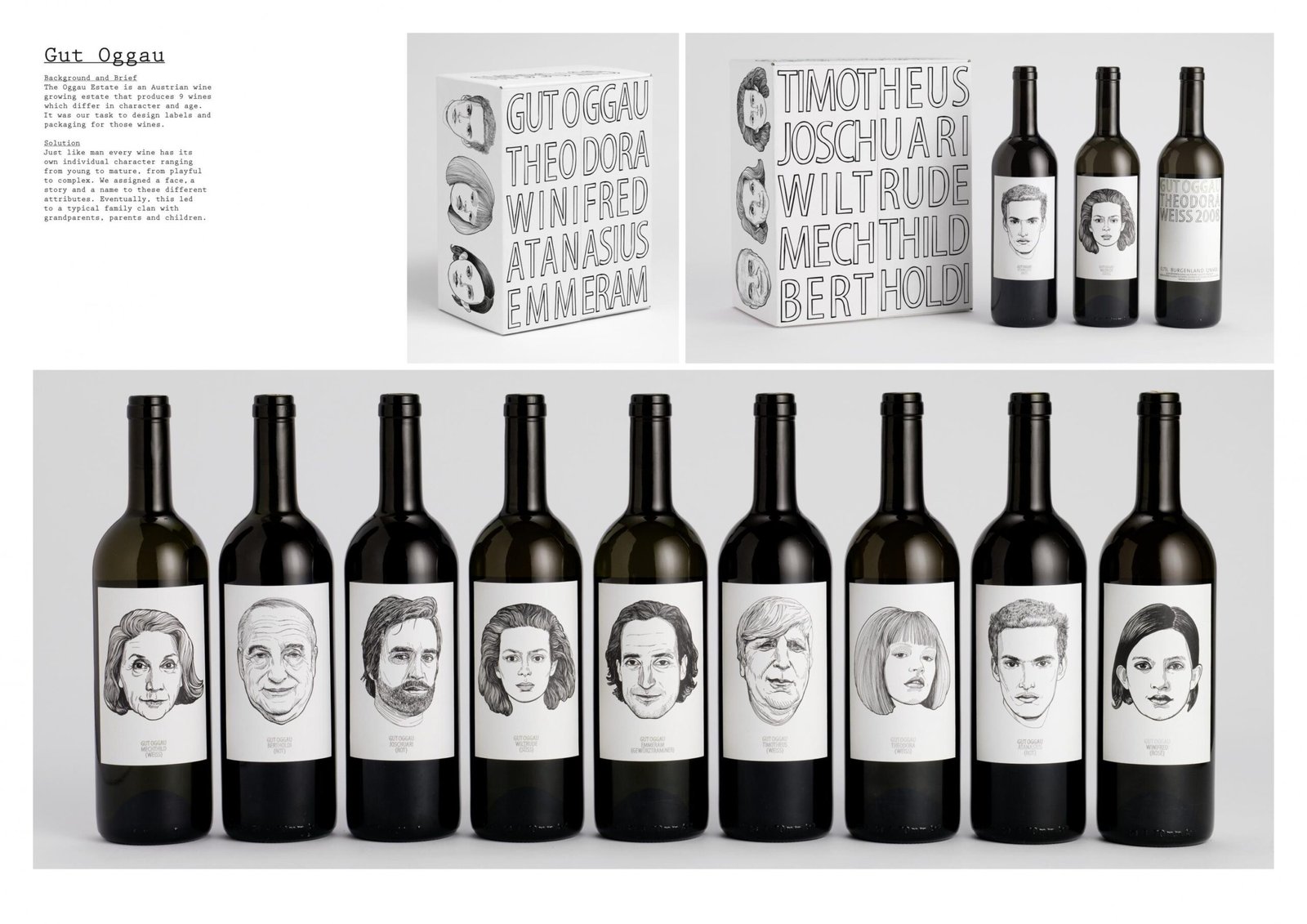
The third award-winning work we share was made by Jung von Matt / Danube for the Oggau winery of Stephanie and Eduard Tscheppe-Eselböck and was awarded a Gold Cannes Lion in 2009.
Oggau Estate is an Austrian wine estate that produces 9 wines differing in character and age. The team’s task was to design labels and packaging for those wines. Their solution consisted in recognizing that, just like people, each wine has its own individual character, from young to mature, from playful to complex. That is why they assigned a face, a story and a name to these different attributes. In the end this led to a typical family clan with grandparents, parents and children.
The fourth winning work at Cannes Lions is from 2015, when Niña obtained a Bronze Lion, press category, alcoholic drinks subcategory, for its campaign for Vinos MP Bodega Salentein, (Tiger, Wolf, Bear).

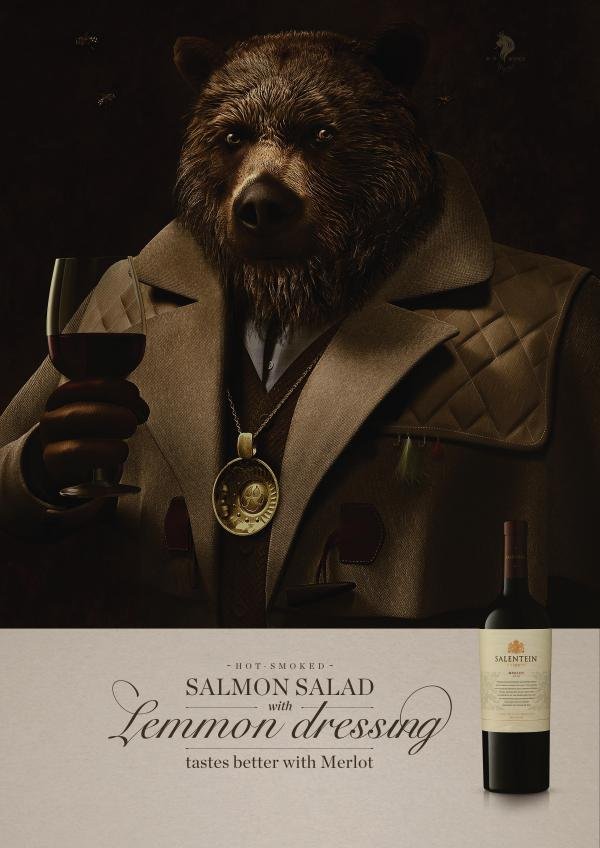

As can be seen in the posters, they played with anthropomorphism, the addition of human characteristics to animals in order to pair their food preferences with the brand’s most suitable wine.
The most recent wine-sector advertising awarded at Cannes is that of the Australian wine “19 Crimes” which tells through augmented reality the way in which its characters —the first colonizers— had to be expelled from Great Britain for carrying out 19 different crimes. It was made by the agency Geometry Global San Francisco CA and awarded in 2017.
Besides the captivating bottles, the corks were marked with a different number, from 1 to 19, each one of them standing for a crime that led to exile from Australia. What is interesting is that these were placed at random in the bottles, so that consumers could collect them all. But be warned, they will embark on an adventure to be able to find number 19, since this one is released in an unlimited way.
Trends
1- Well-constructed story tellings that take ownership of a historical fact generate impact, and position the brand in consumers’ minds, as well as among the best advertising pieces.
An example of this is Chateau Ksara with its work on the history of struggles, conquests, wars and empires surrounding the famous caves of Lebanon that were used to keep wine from 1857 by Jesuit priests or earlier, brought into a wine language.
Also an example in this category is the wine 19 Crimes which, with its proclamation “the wine celebrates the rules they broke and the culture they built”, takes up the story of the first settlers of Australia, who were British convicts and were the first inhabitants of what was then a British colony.
2- Technology at the service of the senses. Although when one chooses a wine what one would mainly like is to see it in the glass and smell it, through augmented reality these bottles attract the curiosity of sight and hearing. They provide an experience for the user that can be loved or hated, but that undoubtedly does not go unnoticed.
3- Betting on new styles and designs, thinking outside the box. Under this point would fall the innovative search for solutions to represent the age of the wines, a new way of inviting pairing with dishes that enhance the wine experience, all the way to changing the brand’s traditional communication for one that involves creative elements, such as the participation of a film director to change the way of selling a wine.