Social media already occupy a leading role in people’s lives. The active presence of users on the different platforms grows day by day and politicians are no strangers to this digital environment. With this picture it is not surprising that social media will have great prominence in this year’s October presidential elections.
Political campaigns still have a strong presence and impact in traditional media (television, radio and print newspapers) and in out of home, but for some years now the Internet has become the new stage for debate among politicians and the main electoral candidates.
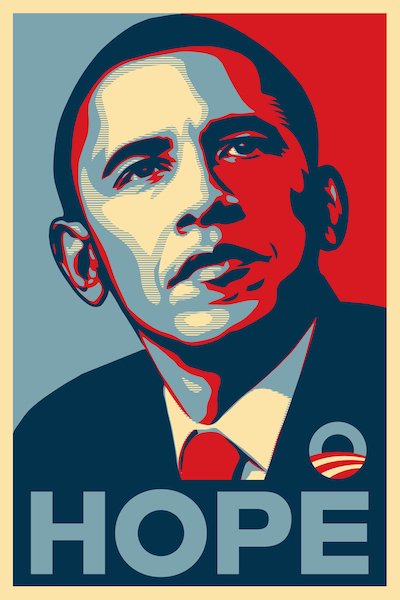
In 2008, Barack Obama was the first presidential candidate to use social media in his strategy, changing forever the way of running a political campaign. Since then, the role of the Internet as a communication medium opened the doors to new possibilities of interaction with voters.
This social media environment has changed the way politics is communicated. In our days, the new modality comes with real-time messages, announcements, and the handling of problems in the political fabric. We know that the level of influence of social media is powerful, but can a political party really win an election with those networks?
The American case was without doubt exceptional, but the reality is that social media cannot guarantee winning an election. Experts in political communication assure that social media will have a leading role in the polls but will in no way ensure the victory of a given candidate.
“The networks can clearly define the electorate, allowing candidates who are level with others in the polls to add four or five crucial points“, states Mariano Tato, CEO of BeCom1, a company specialized in political communication.
In the 2010 elections, the United Kingdom saw the influence of social media reduced, with traditional media dominating the campaign. In September last year, during the campaign for the referendum vote on the independence of Scotland, social media played a fundamental role. The debate on those channels was very strong but while the statistics on the networks showed a marked trend toward “Yes” (that is, in favor of independence), the results of the polls turned out to be the opposite, and it was “No” that prevailed with 55, 3% of the votes.
During the 2010 United States Congress elections, Facebook carried out a social engineering experiment. The company collaborated with a group of political scientists to see whether a social network could persuade Americans to go and vote, altering the news feed of millions of users. The answer turned out to be positive, but again we are looking at a case of media manipulation, just as any of the traditional media can exercise.
But what is happening in Argentina? How is 2.0 influence shaping up around October’s polls? As already mentioned, here in our country, the Internet and social media still constitute a complement to the powerful influence that traditional media continue to deploy.
The multiplicity of social networks is notorious and the mistake of many candidates is to focus on just one, as can be the case of Facebook. Unlike other media, each social network has its own logic and a specific user profile; therefore, political strategy must adapt to it. The possibilities of communication are infinite and causing a positive impact on citizens is the great challenge of the moment.
The possibility of interaction that these tools allow is one of the key factors. Through them everyone can interact, give opinions and comment; and politicians can speak out about some issue and get quick responses from their interlocutors. Likewise, users value the way politicians present themselves on them. But this is where one of the main failures is observed. Politicians increase their participation on the internet during elections, but once they reach their seat as deputies or senators they move away from the networks, turning a deaf ear to citizens’ demands.
Another mistake, pointed out by political communication advisor Augusto Erbin, is the adoption of these social channels as simple communication media, without realizing that their main particularities are conversation and the constant participation of people.
If there is something the Internet revolutionized forever it is the one-way nature with which traditional communication media work, turning digital channels into two-way ones and thus being able to generate active listening. That is why it is very important to make use of these channels to know what citizens want and what their needs and concerns are. To be able to listen and to respond.